
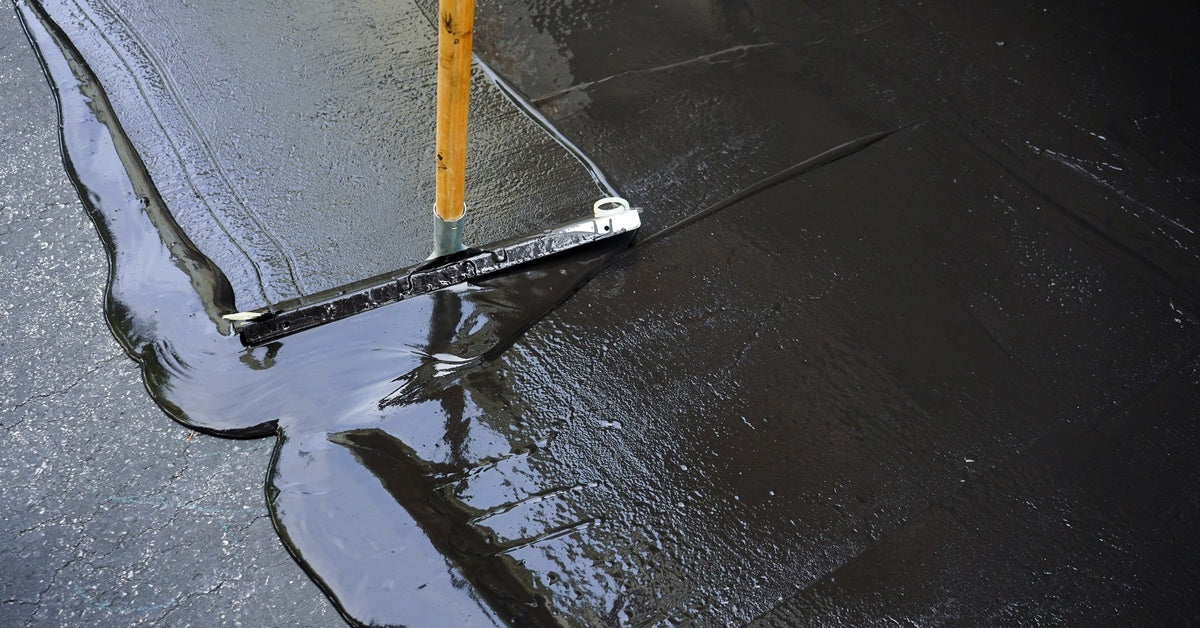
Applying a sealer to asphalt is one of the most effective ways to protect and preserve it. But if you want to take your projects to the next level, sealer additives can significantly enhance your results. These additives mix directly into your sealer to improve its performance in several key ways, delivering a superior finish.
One of the most immediate benefits of asphalt sealer additives is that they accelerate the sealer’s drying process. This allows you to reopen parking lots and driveways to traffic much sooner, minimizing disruptions for your clients.
Faster curing times also reduce the risk of the fresh sealcoat being damaged by unexpected rain, tire marks, or foot traffic, ensuring the finished surface remains pristine. This efficiency means you can complete jobs more quickly and move on to the next one with confidence.
Asphalt sealer typically cures best within a certain temperature range, which can limit when you can apply it. Additives overcome this challenge by expanding the range of suitable application conditions. With the right additives, you can successfully seal and cure asphalt in temperatures that would normally be too cold or too hot for standard sealer, giving you greater scheduling flexibility and a longer operating season.
Beyond performance, additives can dramatically improve the visual appeal of the finished surface. They create a darker, richer blacktop that looks clean and uniform.
Additives also suspend sand within the sealer mixture, preventing it from settling and ensuring a consistent, even texture across the entire surface. This results in a professional, streak-free finish that enhances the property’s curb appeal and leaves a lasting impression on your clients.
A great-looking surface needs to last, and additives reinforce the sealcoat for long-term durability. They improve the sealer’s resistance to scuffing from power steering marks and heavy vehicle traffic. The fortified sealcoat is also better equipped to withstand damage from oil, gas, and chemical spills, as well as the harsh effects of sun and rain. This added toughness means the pavement stays protected for longer.
One final benefit of asphalt sealer additives is long-term cost savings. Because the surface is better protected against wear and tear, you won’t need to reapply the sealer as frequently. For your clients, this means a longer-lasting investment and fewer maintenance expenses, adding significant value to your services.
Incorporating additives into your sealcoating process offers a clear advantage, helping you deliver superior results on every job. From faster completion times to a more durable and attractive finish, these products are a smart investment. To get the high-quality materials you need for your next project, source all your equipment from a trusted asphalt supply company like us here at NAC Supply.
Comments will be approved before showing up.


